In the modern information society, the stability and reliability of power supply are very important. Whether it is a data center, a hospital, a bank or a key business system of an enterprise, once power interruption or voltage fluctuation occurs, it may cause serious data loss, equipment damage and even safety accidents. Therefore, it is particularly critical to equip UPS (Uninterruptible Power Supply) in the power security system. Reasonable configuration of UPS power supply is the premise to ensure the stable operation of power system.
First, clear load demand
The first step in configuring UPS power supply is to accurately evaluate the load demand. Users need to know the total power of the devices to be protected, including servers, network devices, monitoring systems, etc. Usually, the power of these devices is marked on the nameplate, and the unit is watt (W) or volt-ampere (VA). Considering the output power factor of UPS, it is generally recommended that the rated capacity of UPS is 20%~30% higher than the total load power to ensure sufficient redundancy and system stability.
Second, choose the appropriate UPS type
UPS can be divided into three categories according to its working principle and application scenarios: Off-Line, Line-Interactive and On-Line.
-Back-up UPS: It is suitable for occasions with low power quality requirements, such as personal computers and small office equipment, with low price and long switching time.
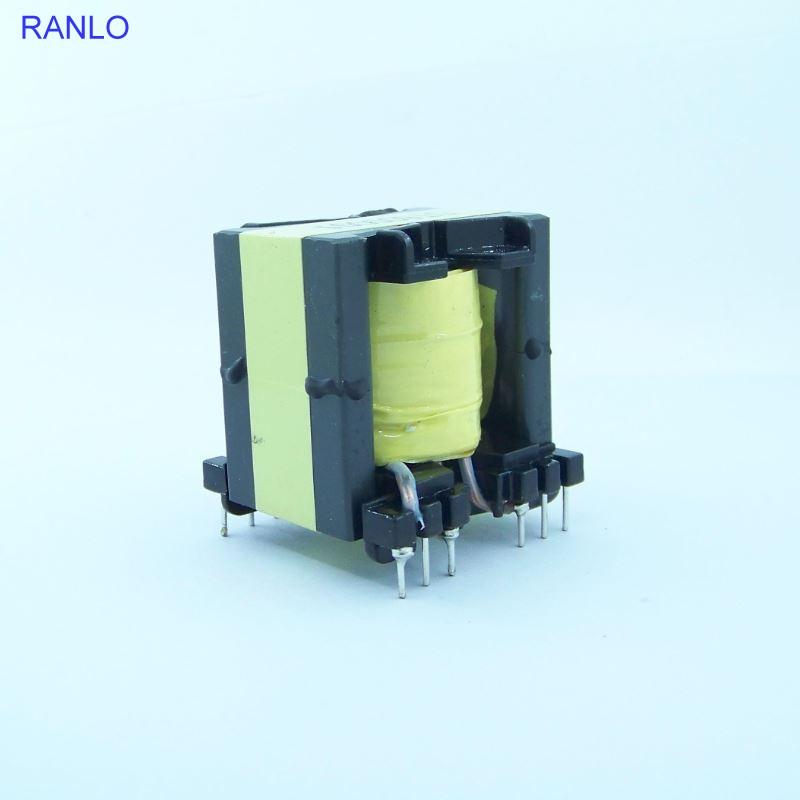
On-line interactive UPS: It is suitable for occasions with moderate power quality requirements, such as small and medium-sized servers, and has good voltage regulation function.
-On-line UPS: It is suitable for places with high requirements for power continuity and stability, such as large data centers and medical equipment, providing zero switching time and pure AC output.
Third, configure the battery pack and battery life
attery pack is the core component of UPS to realize uninterrupted power supply. When configuring batteries, the appropriate battery capacity and quantity should be selected according to the load size, the required battery life and the environment of the computer room. Generally speaking, UPS manufacturers will provide calculation tools or reference tables for battery life. For key systems, it is recommended to configure and support at least 5~10 minutes of battery life to complete data saving and system shutdown operation in case of power failure; For scenes that need long-term power supply, external battery cabinet or modular UPS system can be considered.
Fourth, redundancy and parallel configuration
In order to improve the reliability of power supply system, large-scale systems often adopt redundant configuration or parallel operation of multiple UPS. For example, N+1 redundant structure is adopted, that is, N UPS are connected in parallel, and one of them is used as a backup, which can automatically take over the load when one UPS fails, so as to ensure continuous power supply. In addition, the parallel system also has the advantages of load balancing and easy maintenance.
V. Monitoring and Management
Modern UPS usually has intelligent monitoring interface, supports SNMP, RS232 or USB communication, and can be integrated with network management system to realize remote monitoring and management. Through the centralized monitoring platform, the administrator can grasp the running status, power consumption and fault information of UPS in real time, and improve the maintainability and response speed of the system.
tag
To sum up, the scientific configuration of UPS power supply is the key link to ensure the reliable operation of power system. From load assessment, type selection, battery configuration to redundancy design and intelligent management, every link needs to be carefully planned according to actual application scenarios. Only in this way can UPS really play its role as "power guardian" and provide continuous, stable and safe power guarantee for key equipment and business systems.

 Time:2025-12-13 01:01:03
 ClickNumber of times:207
  Browse
 Home page
 position: