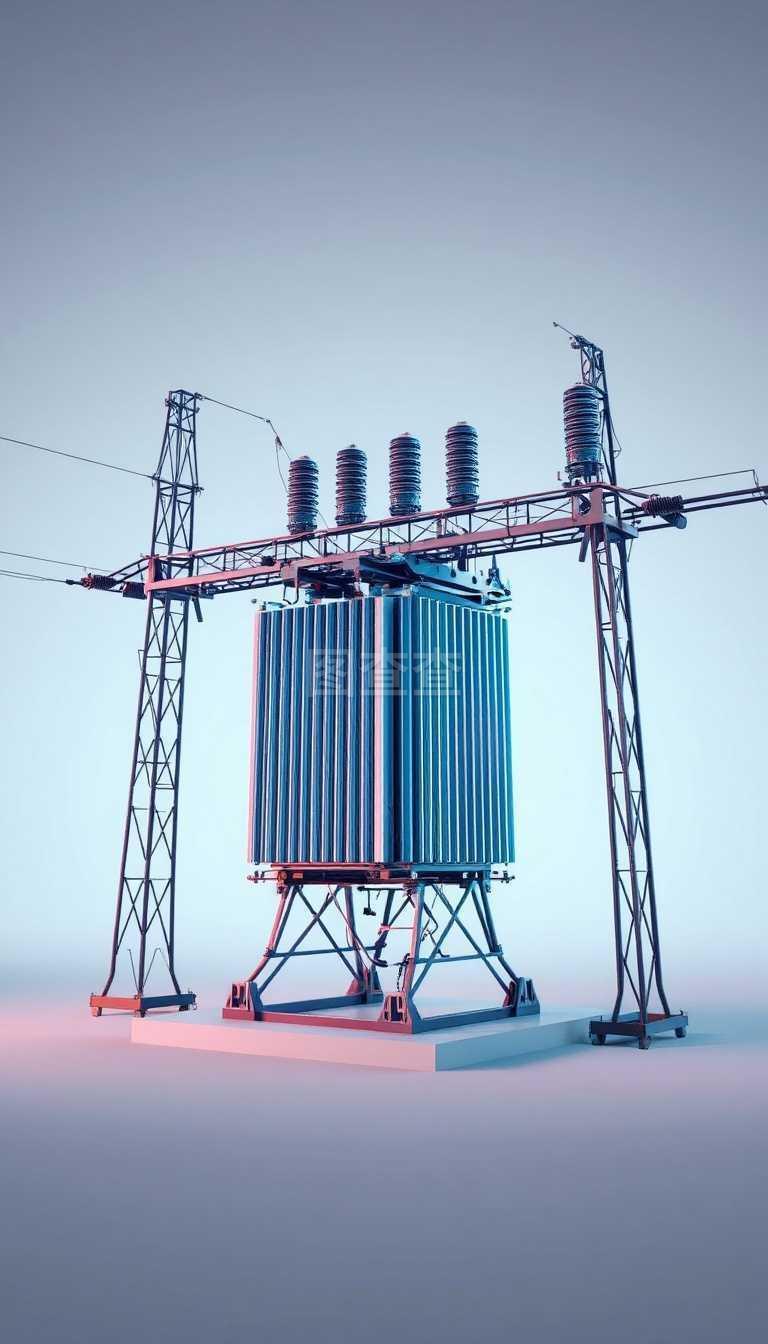
Transformer is an indispensable and important equipment in modern power system. Its core function is to realize efficient transmission and distribution of electric energy by changing the magnitude of AC voltage. The basic working principle of transformer is based on Faraday's law of electromagnetic induction.
irst, the basic principle of electromagnetic induction
Electromagnetic induction is a phenomenon that electromotive force is generated inside the conductor when the guiding body moves in the magnetic field or the magnetic field changes. In 1831, michael faraday, a British physicist, discovered through experiments that when the magnetic flux passing through a closed circuit changes, an induced electromotive force will be generated in the circuit, which may lead to an induced current. This phenomenon is summarized as Faraday's law of electromagnetic induction:
$$
mathcal{E} = -frac{dPhi_B}{dt}
$$
Where $mathcal{E}$ is the induced electromotive force and $Phi_B$ is the magnetic flux passing through the coil. The negative sign indicates that the direction of induced electromotive force always hinders the change of magnetic flux that causes it (Lenz's law).
econd, the structure and basic composition of transformer
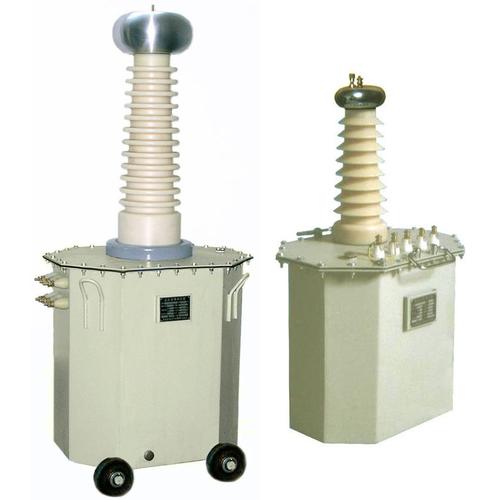
Transformer is mainly composed of two windings (primary winding and secondary winding) and an iron core. The two windings are wound around the iron core respectively, and there is no direct electrical connection between them, but they are coupled through the magnetic flux in the iron core.
When an alternating voltage is applied across the primary winding, an alternating current will be generated in the coil, thus forming an alternating magnetic field in the iron core. This alternating magnetic field will pass through the secondary winding again, resulting in induced electromotive force in the secondary winding.
Third, how does electromagnetic induction explain the working principle of transformer?
According to the law of electromagnetic induction, when an alternating current flows in the primary winding, an alternating main magnetic flux will be generated in the iron core. This magnetic flux almost completely passes through the secondary winding, thus inducing electromotive force at its two ends.
Let the number of turns of the primary winding be $N_1$, the applied voltage be $U_1$, the number of turns of the secondary winding be $N_2$, and the generated voltage be $U_2$. In an ideal situation (ignoring losses and magnetic leakage), the voltage transformation relationship of the transformer can be obtained:
$$
frac{U_1}{U_2} = frac{N_1}{N_2}
$$
This shows that the transformer can effectively increase or decrease the AC voltage by changing the turns ratio of the winding. If $N_2 > N_1$, then $U_2 > U_1$ is called a step-up transformer; On the contrary, it is called step-down transformer.
Fourth, the relationship between energy transfer and current
In an ideal transformer, the input power equals the output power:
$$
P_1 = P_2 Rightarrow U_1 I_1 = U_2 I_2
$$
From this, the relationship between current and voltage is inversely proportional:
$$
frac{I_1}{I_2} = frac{N_2}{N_1}
$$
This shows that when the voltage increases, the corresponding current will decrease, thus realizing the efficient conversion of electric energy in the transmission process.
V. Practical application and significance
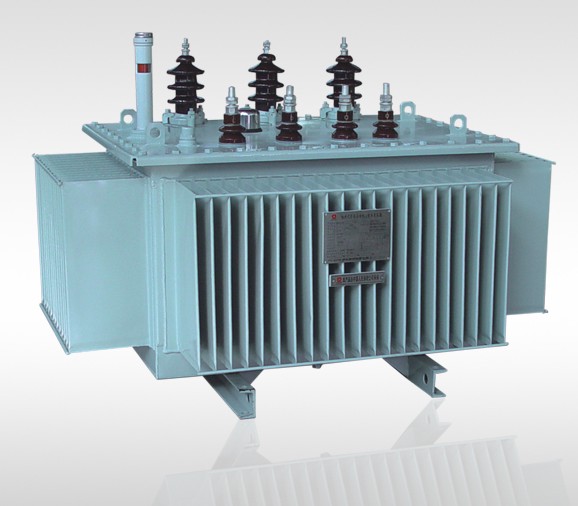
Transformer plays a key role in power system. For example, high-voltage transmission requires a step-up transformer to reduce energy loss in transmission lines; On the user side, the step-down transformer reduces the high voltage to a low voltage suitable for use.
In addition, transformers are also widely used in electronic equipment, signal isolation, impedance matching and other fields, and their working principle is always inseparable from the basic laws of electromagnetic induction.
tag
To sum up, the working principle of transformer is essentially the specific application of electromagnetic induction. Electromotive force is induced in different windings by changing magnetic field, so as to realize the transformation of voltage and current. Electromagnetic induction not only explains how the transformer works, but also embodies the great value of physical theory in engineering practice. Understanding this principle will help us to better grasp the design and operation mechanism of power system.

 Time:2025-12-08 13:52:14
 ClickNumber of times:169
  Browse
 Home page
 position: