Transformer is an important electrical equipment used to convert voltage in AC circuit, which is widely used in power system, electronic equipment and various industrial and household appliances. Through the principle of electromagnetic induction, it changes the voltage without changing the current frequency, which provides an important guarantee for the efficient transmission and reasonable distribution of electricity.
First, the basic structure of transformer
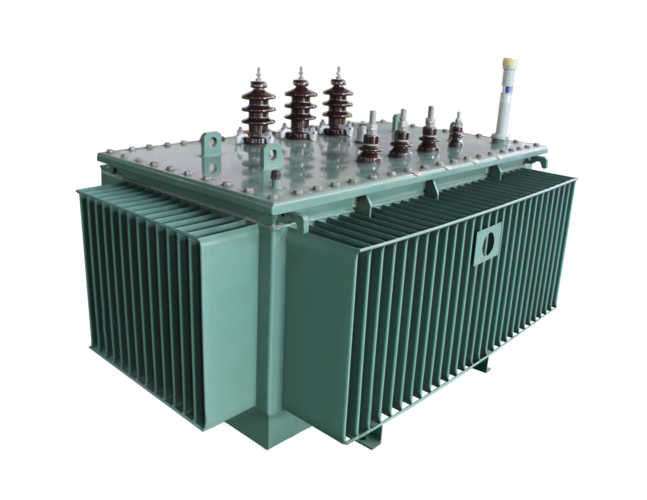
Transformer is mainly composed of iron core and winding. The iron core is usually made of silicon steel sheets with good magnetic conductivity energy to reduce eddy current loss; The winding is made of insulated wires and is divided into primary winding (input end) and secondary winding (output end). When alternating current passes through the primary winding, an alternating magnetic field will be generated in the iron core.
Second, the principle of voltage conversion
The core principle of transformer voltage conversion is "electromagnetic induction". According to Faraday's law of electromagnetic induction, when a changing magnetic field passes through a conductor, electromotive force will be induced at both ends of the conductor. Specifically, when the primary winding is connected to the AC power supply, an alternating magnetic flux will be formed in the iron core. This alternating magnetic flux passes through the secondary winding at the same time, so that the potential is induced at both ends, and the energy is transferred from the primary winding to the secondary winding.
The conversion ratio of voltage depends on the turns ratio of primary winding to secondary winding, namely:
$$
rac{U_1}{U_2} = frac{N_1}{N_2}
$$
Among them, $ U_1 $ and $ U_2 $ are the primary and secondary voltages, and $ N_1 $ and $ N_2 $ are the turns of the primary and secondary windings, respectively. If $ N_2 > N_1 $,the output voltage is higher than the input voltage, which is called step-up transformer; On the contrary, it is called step-down transformer.
Third, the characteristics in practical application
1. No moving parts, reliable operation: Since the transformer has no moving parts, it has stable operation, less maintenance and long service life.
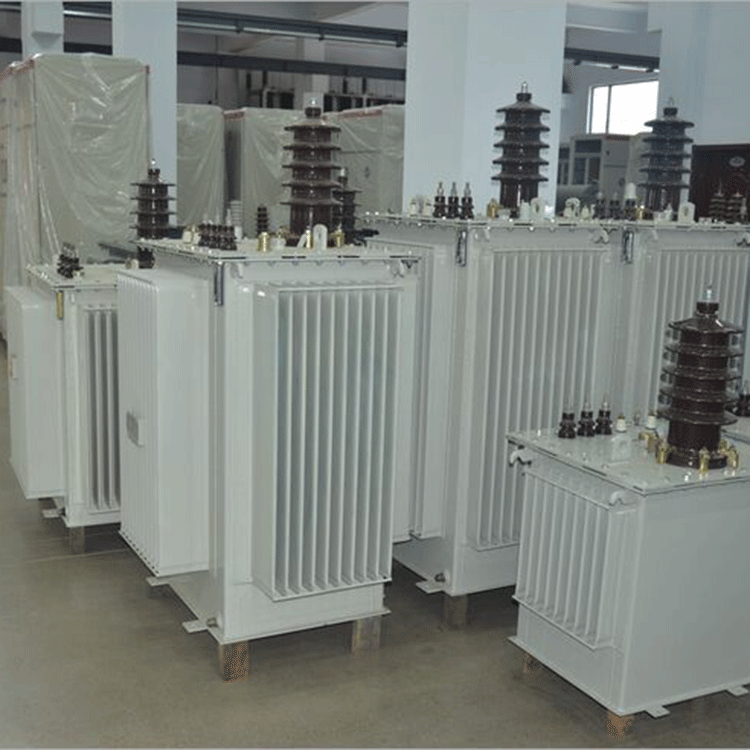
2. High efficiency and energy saving: The efficiency of modern transformers can be as high as over 98%, which can effectively reduce the loss in the process of power transmission.
3. Strong adaptability: it can meet the requirements of various voltage levels through different winding configurations, and is suitable for power transmission and distribution, industrial control, signal isolation and other fields.
IV. Conclusion
To sum up, the transformer realizes the effective conversion of AC voltage by using the principle of electromagnetic induction and the difference of turns between primary and secondary windings. It is not only one of the core equipments in modern power system, but also provides important support for the development of electronic technology and automation control. With the progress of science and technology and the continuous application of new materials and designs, transformers are developing in the direction of high efficiency, energy saving and miniaturization.

 Time:2026-03-11 12:12:17
 ClickNumber of times:119
  Browse
 Home page
 position: